
Understand what the term establishes
Virus-free seed potatoes are produced from material managed to reduce specified virus risks and verified through an appropriate testing programme. The meaningful questions are which viruses were tested, how and when samples were taken, and what material the result represents. A negative result applies to the tested target and sampling context; it does not demonstrate freedom from every pathogen.
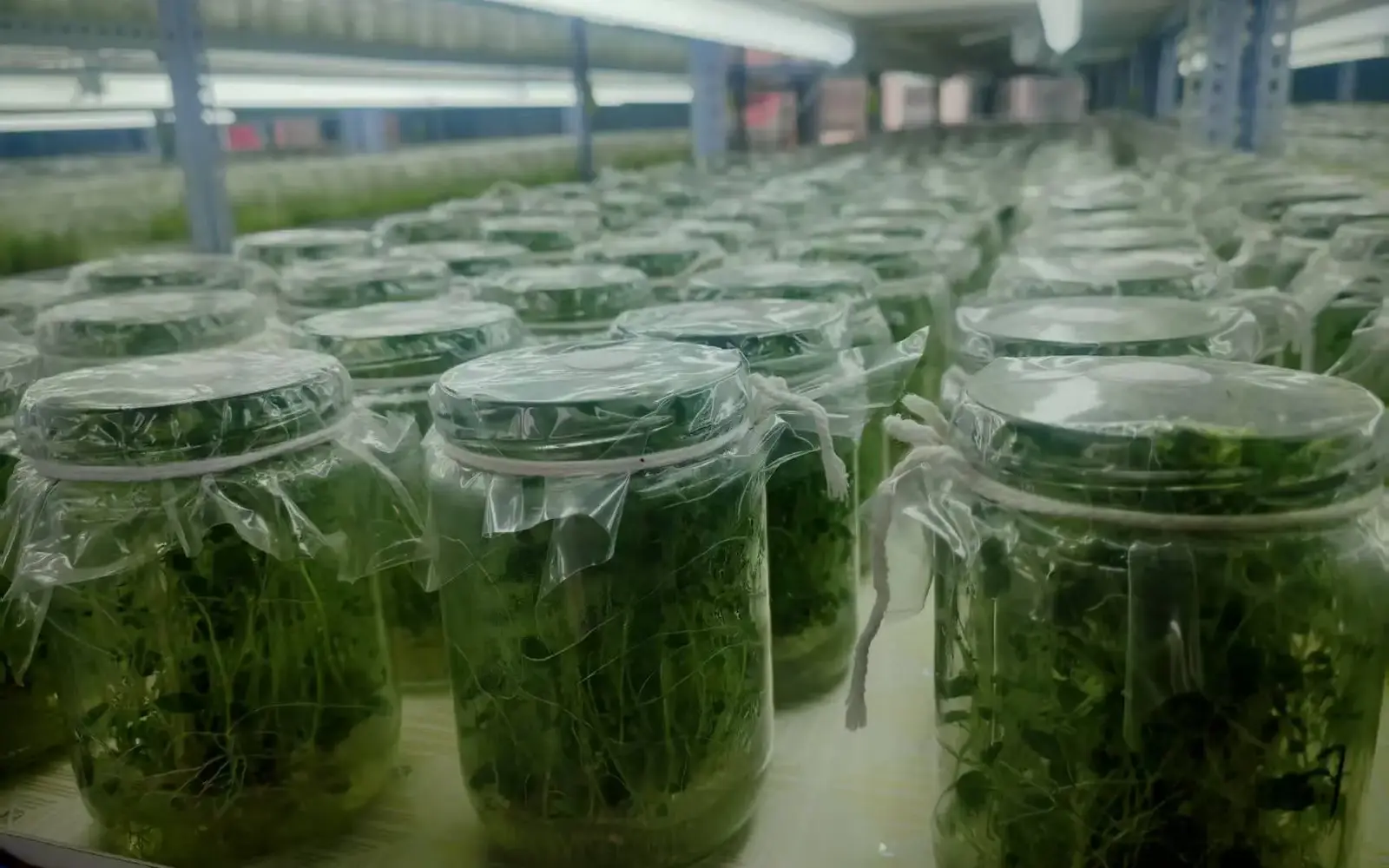
Virus elimination, tissue-culture multiplication and health testing perform different functions. Tissue culture can multiply material, but multiplication alone does not certify its health. Buyers need the sequence and its records, not merely a photograph of healthy-looking plants.
Health status can change during multiplication
After the starting material is released, propagation and field exposure create new opportunities for infection or mixing. Lot separation, equipment hygiene, inspection and locally appropriate vector management help protect the intended status. Suspect plants should be investigated through the applicable procedure rather than blended into an apparently uniform batch.
Generation, field inspection and post-harvest testing provide different information. Read them together and check the applicable certification scheme. A low generation number cannot replace evidence about the actual lot, its growing conditions and its inspection results.
Evaluate yield without promising a fixed increase
Healthier planting material can remove an important constraint on crop performance, but yield also depends on variety, physiological condition, soil, water, nutrition, weather and crop protection. The relevant comparison is a documented trial under comparable management, not a universal percentage claimed for every farm.
Use the same variety and comparable planting material where possible. Record initial stand, emergence timing, disease observations, marketable yield and size distribution. Differences in planting date or tuber size should be documented because they can confound the comparison. A larger total yield is not necessarily a better result if the required grade is not produced.
Specify the lot before purchase
Ask for variety identity, generation terminology and its basis, lot code, quantity, size specification, relevant test records and intended delivery condition. Agree how arrival discrepancies will be documented and who decides whether a lot may be planted, held or returned.
For repeat orders, compare lot performance and the effectiveness of corrective actions over time. A clear health and handling record supports better planting decisions than an absolute disease-free guarantee. The aim is to understand and manage the remaining risk throughout the production chain.
Related reading
- Seed Potato Quality Control: Connecting R&D, Propagation and Field Records
- G0 and G1 Seed Potatoes: How to Verify Generation Terminology
- Seed Potato Physiological Age: Storage History, Sprouting and Planting Plans