
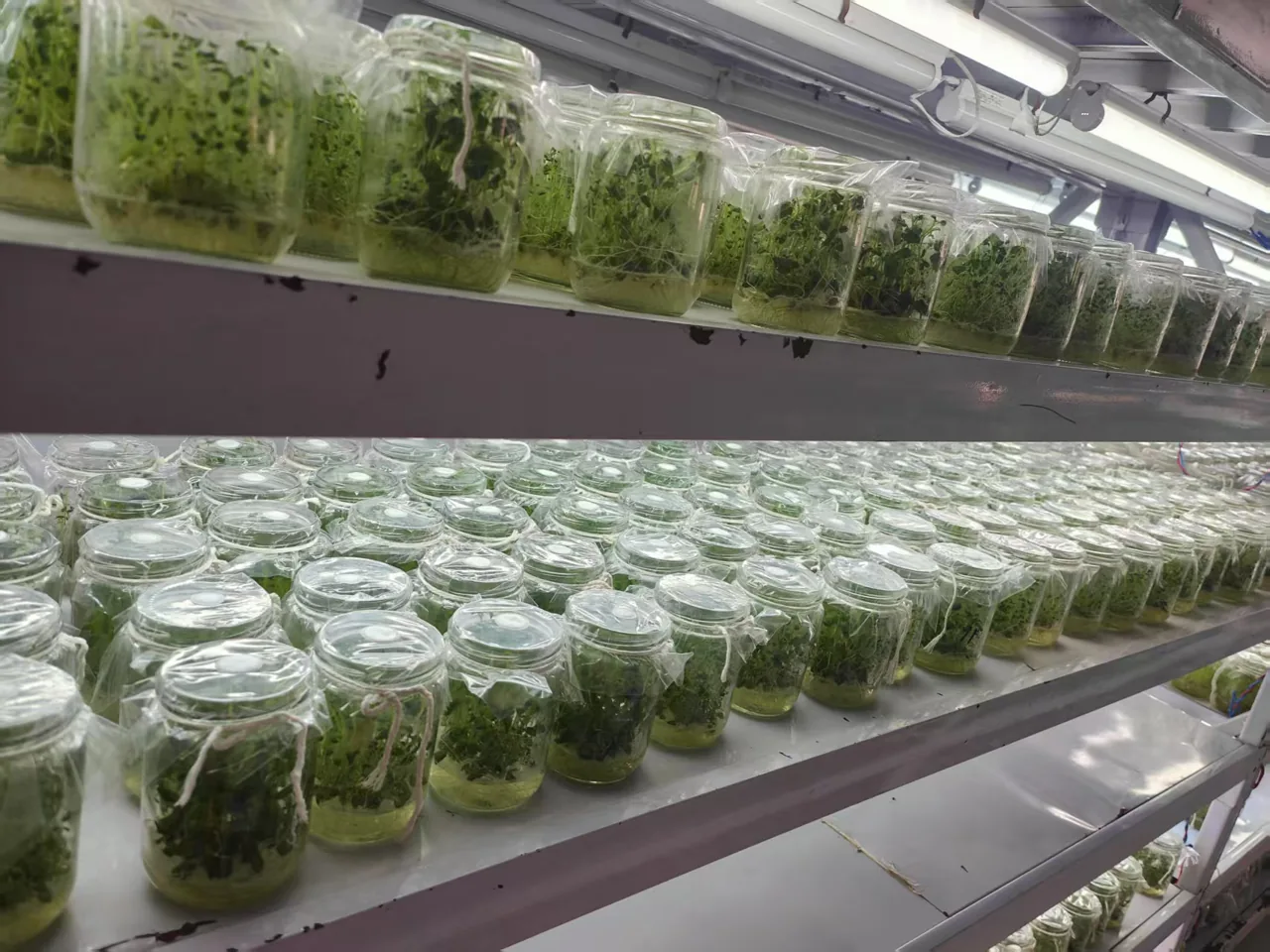
Meristem excision is the starting point
Junsheng uses meristem excision in potato plantlet cultivation. Under magnification, the growing tip is isolated and placed into culture. Tissue culture then supports regeneration and multiplication; it describes the culture process, while virus elimination describes the health objective.
Why a growing tip is selected
Virus distribution can differ within a shoot. A small apical meristem may offer an opportunity to recover a line free of the viruses being targeted, but this is not a universal guarantee. The outcome depends on the virus, variety, starting material and treatment.
Smaller explants can be more difficult to establish. Larger explants can regenerate more readily but may retain infected tissue. An explant size should therefore be validated for the material and treatment rather than used as a universal recipe.
From selected mother plant to a regenerated line
01 · Identify
Keep the mother-plant identity, variety and health history linked to each candidate line.
02 · Excise & culture
Use clean handling, isolate the growing tip and track contamination, regeneration and abnormal growth separately.
03 · Test & select
Evaluate regenerated lines for the specified viruses before choosing material for multiplication.
Culture photographs
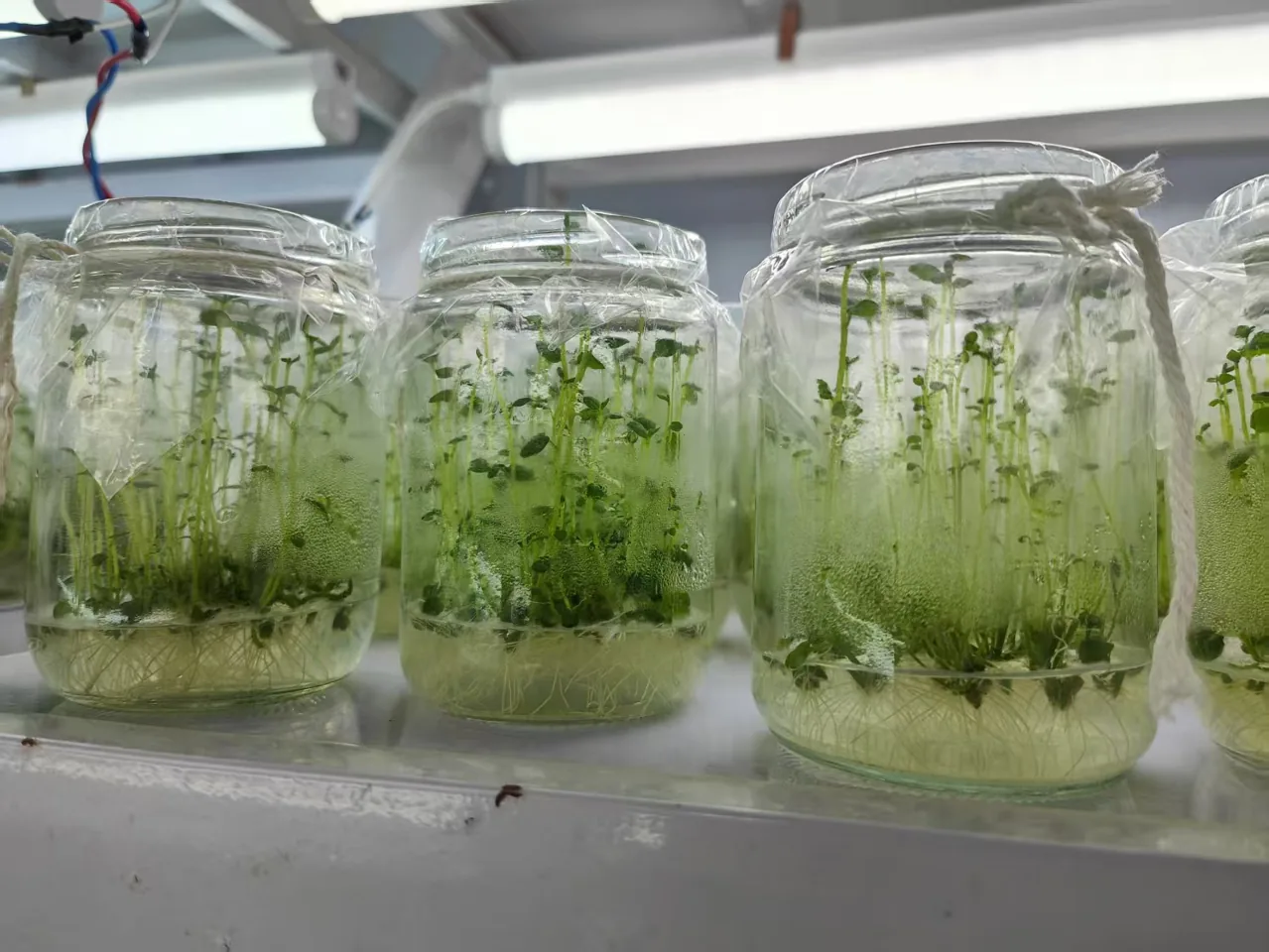
Testing defines the health claim
A plantlet that looks healthy is not sufficient evidence of virus elimination. Review the organisms tested, sampling stage, method, result and identity of the tested line. A negative result applies to the tested targets and sample; it does not establish the absence of every possible pathogen.
ELISA and molecular tests answer different questions under their validated conditions. The appropriate testing programme should be agreed for the material and delivery requirements. Avoid assigning an unsupported detection limit or universal success rate.
Multiplication and delivery
Keep regenerated lines identifiable during multiplication. Agree whether the order requires in-vitro plantlets, acclimatised plantlets or minitubers, and match transport and reception arrangements to that form. Confirm variety, quantity, batch records and the available health documentation before dispatch.
Technical references
CIP · Phytosanitary procedures
Bettoni et al. · Potato virus elimination research