
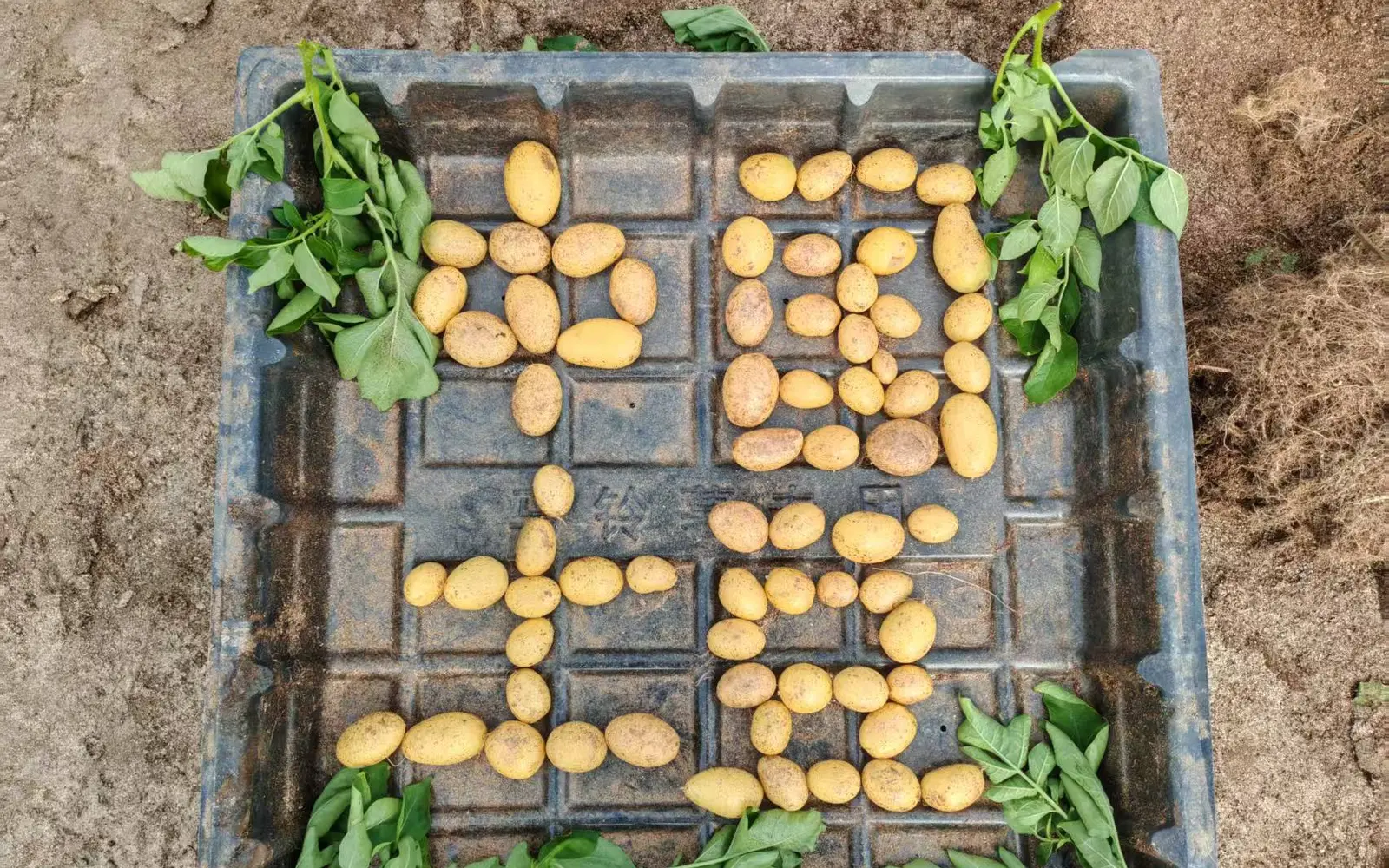
What Do G0 and G1 Seed Potatoes Mean?
An integrated potato industry insight from Hebei Junsheng Agriculture Co., Ltd., explaining how early-generation G0 and G1 seed potato production supports seed health, field performance, raw material consistency and a stable potato supply chain.
G0 and G1 represent early stages in a controlled seed potato multiplication system.
Early-generation management helps protect varietal purity, reduce disease risk and support uniform field performance.
Healthy and traceable G0 and G1 seed potatoes help establish more consistent commercial potato production.
For overseas buyers, G0 and G1 can be understood as controlled early generations close to virus-free source material.
G0 and G1 Are More Than Simple Seed Grades
In the potato industry, customers may encounter terms such as G0 seed potatoes and G1 seed potatoes. They can look like simple grade names, but their practical meaning is more closely connected with early-generation control in a virus-free seed potato multiplication system.
Generation management may begin in seed production, but its influence extends into commercial potato growing. Seed health, varietal purity, field uniformity, disease control and traceability can all affect the consistency of potatoes supplied to growers and downstream food processors.
Seed potato certification terminology is not identical in every country. In this article, G0 and G1 are used to describe controlled early-generation seed potato stages close to virus-free source material and mini-tuber production.
What Do G0 and G1 Seed Potatoes Mean?
G0 and G1 are used to identify early generations within a seed potato multiplication program. The process starts with virus-free plantlets produced through tissue culture and health testing. These clean plantlets are then used to produce mini-tubers or other early-generation seed material under controlled conditions.
In our current seed potato supply system, the focus is on G0 and G1. G0 is the early-generation seed stage produced close to the virus-free source, while G1 is the next controlled multiplication stage developed from G0 material. Both stages require clear batch identification, disease management, field control and appropriate storage.
Because certification systems and generation names can differ between markets, overseas buyers should evaluate not only the generation label but also the health testing, seed source, production environment, traceability and quality-control system behind each batch.
Why Is Early-Generation Seed Potato Control Important?
Potato is mainly propagated by tubers rather than botanical seed. This helps preserve varietal characteristics, but vegetative propagation also means that viruses and other pathogens can be carried forward if seed health is not carefully controlled.
When seed health declines, growers may see uneven emergence, weaker plant growth, reduced tuber uniformity, lower marketable yield and greater field-to-field variation. For potatoes intended for processing, inconsistent raw material can also influence dry matter, reducing sugar, maturity and processing suitability.
This is why an early-generation G0 and G1 seed potato program emphasizes clean source material, controlled multiplication, field inspection, removal of abnormal plants, vector management, batch traceability and proper storage.
Key Differences Between G0 and G1 Seed Potatoes
G0 Seed Potato
An early-generation seed stage positioned close to virus-free plantlets and mini-tuber production. The main priorities are seed health, varietal purity, traceability and controlled multiplication.
G1 Seed Potato
The next controlled multiplication stage developed from G0 material. It provides a larger planting volume while continuing to focus on health status, varietal consistency, field performance and batch management.
G0 and G1 should not be evaluated only by the generation number. The production system behind the label is equally important. Virus-free source control, health testing, field selection, isolation, storage, traceability and standardized management determine whether early-generation seed can deliver reliable performance.
How Can G0 and G1 Support Potato Yield and Field Uniformity?
Early-generation seed potatoes are closely connected with seed health and plant growth potential. Healthy seed material can support more uniform emergence, stronger early growth and a more consistent field population. These factors help growers manage irrigation, fertilization, crop protection and harvest more predictably.
Stable seed health does not replace good agronomy, but it provides a stronger starting point for commercial production. When the seed source is well controlled, differences caused by disease accumulation, varietal mixing or poor batch management can be reduced, helping improve overall crop consistency.
Why Should Food Processors Understand G0 and G1 Seed Potatoes?
Many overseas customers purchase potato flakes, potato granules, potato powder or potato starch rather than seed potatoes. However, stable food processing begins with stable raw potatoes, and raw potato consistency is influenced by variety, seed health, growing conditions, maturity and storage.
Used for fabricated chips, mashed potatoes and snack foods requiring color, flavor and rehydration stability.
Applied in instant mashed potato, soups, bakery foods and texture-controlled formulations.
Supports food manufacturing applications requiring natural potato flavor and stable formulation.
Used where whiteness, viscosity, cleanliness, gelatinization and thickening stability are important.
For fabricated potato chips, buyers often care about color, flavor, rehydration, particle structure, reducing sugar control and batch consistency. Stable upstream potato production can help processors maintain more predictable ingredient performance.
For instant mashed potatoes, soups, bakery products and other processed foods, customers may focus on dispersibility, texture, rehydrated condition and natural potato flavor. These characteristics are influenced not only by processing equipment but also by potato variety, maturity, dry matter and storage condition.
How Overseas Buyers Can Understand G0 and G1
Europe & North America
Buyers are often familiar with certified seed potato, pre-basic seed, basic seed, early generation seed and traceable potato production systems.
Middle East
Buyers commonly focus on reliable seed supply, suitable varieties, stable field performance, documentation and dependable international delivery.
Southeast Asia
Buyers may pay particular attention to climate adaptability, seed health, planting performance, supply stability and cost-effective commercial production.
The terminology used for G0 and G1 may not be identical in every market. For this reason, generation information should be explained together with seed source, testing, production method, batch traceability and intended planting use.
How Hebei Junsheng Agriculture Understands G0 and G1 Management
Hebei Junsheng Agriculture Co., Ltd. focuses on the integrated potato supply chain and treats early-generation seed management as an important foundation for stable potato production. The current seed potato supply scope focuses on G0 and G1 seed potatoes.
Key Points in a High-Standard G0 and G1 Seed Potato System
- Virus-free and traceable seed source is the foundation of stable production.
- G0 and G1 generation control keeps multiplication limited, recorded and easier to trace.
- Field isolation, inspection, roguing and vector control are important management steps.
- Storage temperature, ventilation, dormancy and batch separation influence later planting performance.
- Variety, seed health and production records should be matched with the buyer's planting requirements.
From G0 and G1 Seed Potatoes to a Stable Potato Supply Chain
When choosing a seed potato supplier, buyers should compare more than price. Seed source, generation, variety, health status, batch consistency, storage management, documentation and planting suitability can all influence the final purchasing result.
Behind commercial potato production is a complete chain that begins with virus-free plantlets and mini-tubers, continues through G0 and G1 seed potato multiplication, and then connects with commercial planting, storage, processing, testing, packaging and export.
By focusing the current seed potato supply on G0 and G1, the objective is to keep the seed source closer to early-generation material and make quality control, traceability and buyer communication clearer.
Conclusion: G0 and G1 Represent Early-Generation Quality Control
G0 and G1 seed potatoes are not simply two product names. They represent controlled early-generation stages within a seed potato multiplication system and reflect how a supplier manages seed source, health, varietal purity, production records and traceability.
For growers, these controls can support more consistent establishment and field performance. For international buyers, they provide a clearer way to understand the origin, generation and management of the seed potatoes being purchased.
FAQ: G0 and G1 Seed Potatoes
Are G0 and G1 official international seed potato grades?
Not necessarily. Certification terminology varies by country and region. Buyers should review the generation description together with seed source, health testing, traceability and the applicable certification system.
What is the main difference between G0 and G1 seed potatoes?
G0 is positioned closer to the virus-free source and mini-tuber stage, while G1 is the next controlled multiplication stage developed from G0 material. Both remain focused on early-generation seed quality.
Why does seed potato generation matter to growers?
Generation control helps buyers understand how far the material is from the original clean source and how the seed has been multiplied, inspected, stored and traced before commercial planting.
Which seed potato generations does Hebei Junsheng Agriculture currently supply?
No. The current seed potato supply scope focuses on G0 and G1 seed potatoes.
A reliable seed potato program begins with healthy source material, controlled G0 and G1 generations, clear traceability, standardized field management and appropriate storage.